

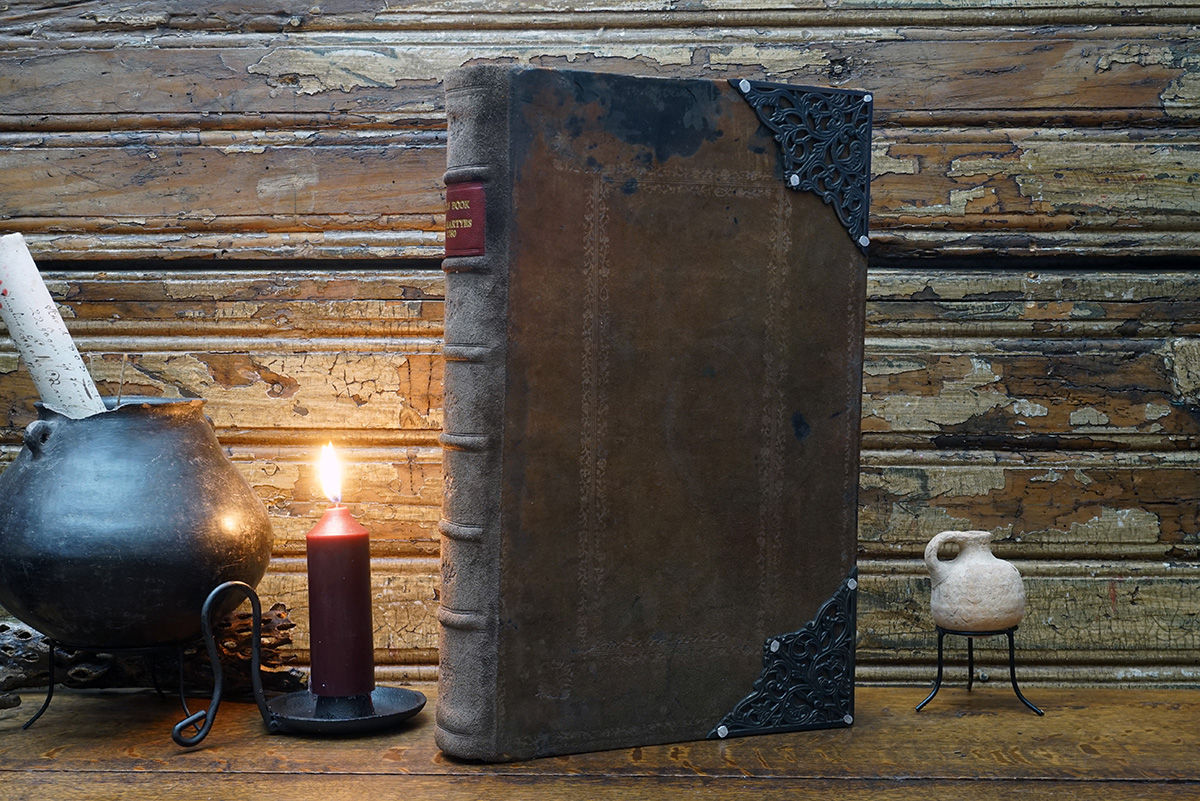

The New Book of Martyrs in 1780 marks a significant commercial and cultural evolution in the long lineage of Protestant martyrology. For over two centuries, John Foxe’s monumental sixteenth-century Acts and Monuments (commonly known as Foxe’s Book of Martyrs) had served as a pillar of the English identity, shaping the nation’s collective memory of religious persecution under Queen Mary I. By the late eighteenth century, Southwell’s version condensed Foxe’s ecclesiastical history and added accounts of subsequent global persecutions, and presented the narratives in a grand folio format, that appealed to a new generation of pious British readers.
When Queen Mary I violently attempted to restore Catholicism to England in the 1550s, resulting in the public burning of nearly 300 Protestant dissenters, she inadvertently created a powerful class of national martyrs. The collective trauma of these executions, codified by John Foxe and later repackaged by Southwell, transformed Protestantism from a theological debate into a core piece of the English indentity. As England transitioned into the Enlightenment, the societal function of these gruesome narratives fundamentally shifted. What began as a fierce weapon to justify the Tudor religion, evolved into an Enlightenment-era tale about the dangers of religious fanaticism, state tyranny, and institutional intolerance.
While the title page prominently credits the respected clergyman "Henry Southwell, LL.D." to lend the project immediate moral and academic authority, the book was actually ghostwritten by Robert Sanders, a brilliantly erudite but impoverished Scottish writer working in the literary trenches of Fleet Street.
